

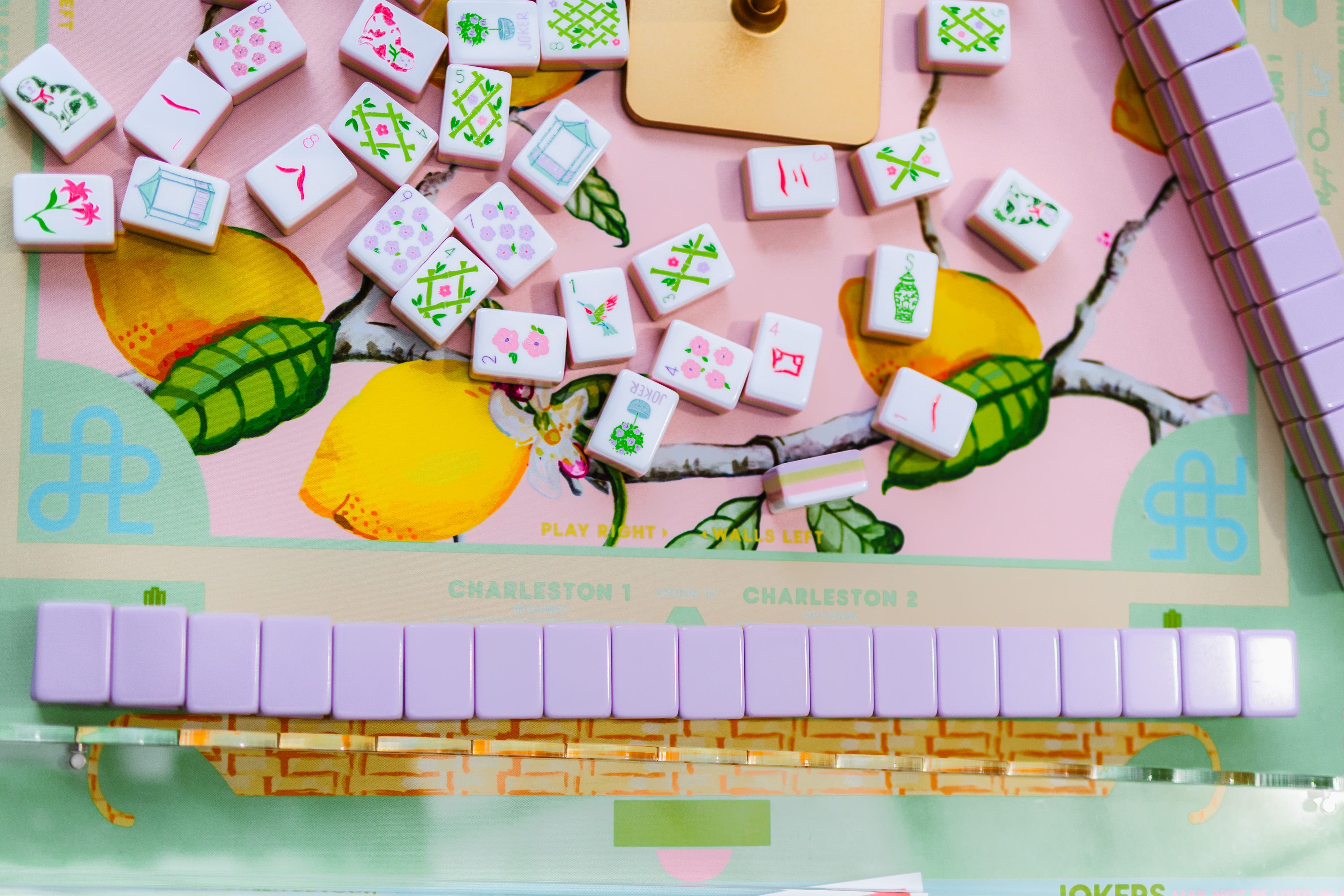
Most new players play heads down. You watch your own rack, you pick, you discard, and the rest of the table is a blur. Then someone declares mahjong and you never saw it coming.
Reading the table can feel like a skill other people have and you do not. It is not. It is a habit, and you build it one discard at a time. You can start at your very next game.
Every discard is information
Here is the whole idea in one line. Every tile a player throws is them telling you, out loud, what they have decided they do not need. You do not have to memorize anything. You just have to notice the pattern.
Once you start watching the discards instead of ignoring them, the table stops being a blur and starts being a conversation.
What the discards are telling you
A few reads you can pick up right away:
Early flowers talk. Flowers show up in 22 of the 55 hands on the 2026 card. So when someone tosses a flower early, that hand probably does not use them. You just learned something about their plan.
Which numbers they dump. When a player keeps throwing the same number family, evens, odds, or 3s 6s 9s, they are telling you which section they have ruled out. The numbers they let go point you toward the ones they are keeping.
What they stop throwing. The tiles a player suddenly holds matter as much as the ones they throw. When the discards go quiet in one number family, assume they are collecting it, and slow down before you feed it.
When they expose, they show you their hand
The clearest read of all is an exposure. When a player calls a tile and lays a pung or kong face up on their rack, that is public and locked in. It tells you exactly which section they have committed to.
Here is the move most players miss: watch the very next tile they discard after exposing. It shows you what they just ruled out as they narrow toward their hand. One exposure plus one discard often tells you most of what they are holding.
Let the read come to you
You do not force any of this. You are not solving a puzzle on turn three. You collect small signals, an early flower here, a number family going quiet there, and let the picture form. By the middle of the game, the table has basically narrated itself to anyone who was paying attention.
And that is the real payoff of defensive play. When you can see who is close, you stop handing them the tile that wins. You play your own hand and you stop feeding theirs.
Reading the table is a habit, and habits stick fastest when you practice them live with someone pointing them out in real time. That is exactly what my Strategy Sessions on Zoom are for: a small group, real hands, and me walking through the reads with you as they happen. Come save a seat.
See upcoming Strategy Sessions
For quick daily tips, tile talk, and behind-the-scenes, follow along on Instagram at @larasmahjongedit.
For everything from Lara’s Mahjong Edit, including new lessons, classes, events, and the occasional fun extra, join the Lara’s Mahjong Edit newsletter here.
Lara