

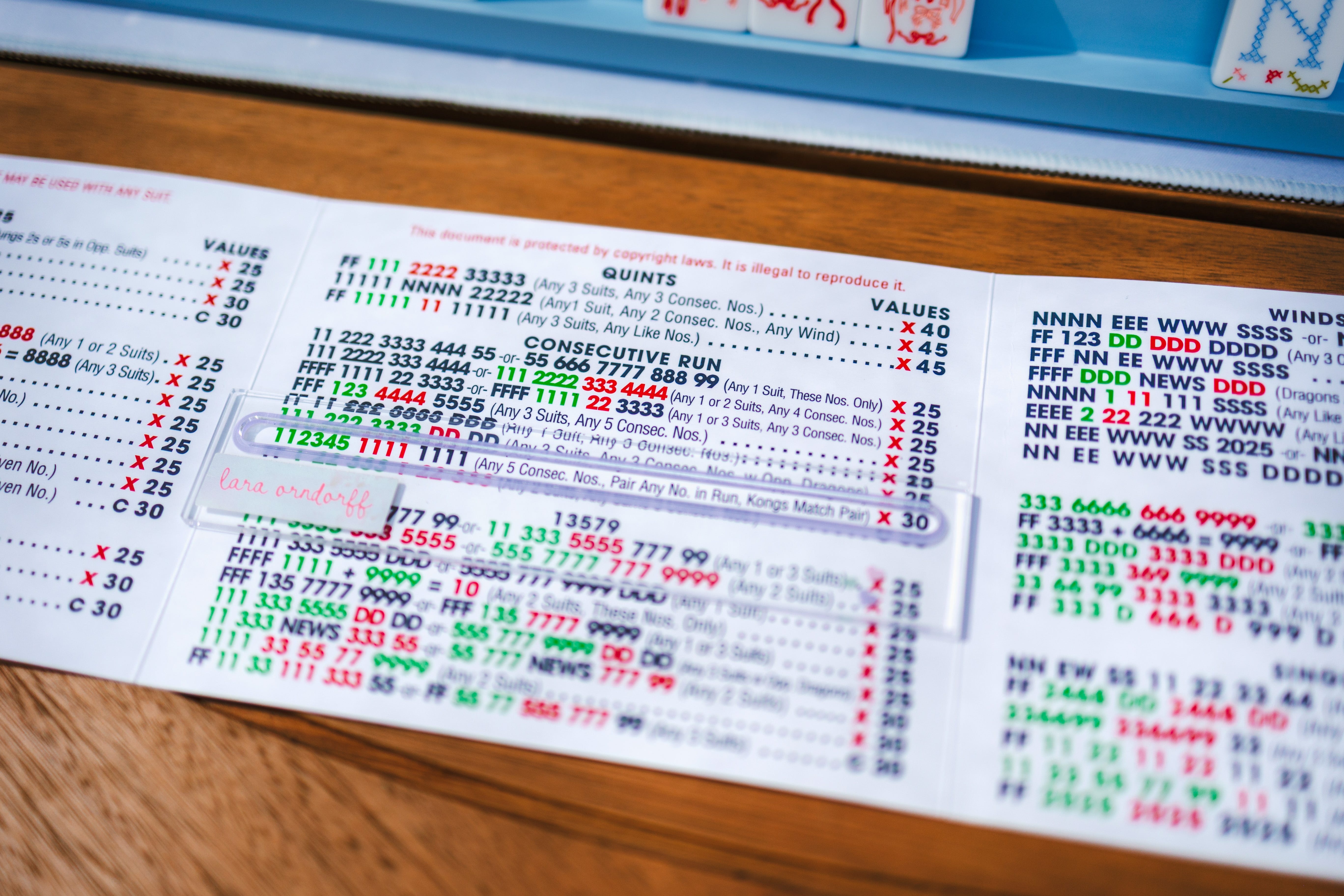
Picking a hand is where a lot of new players freeze. Choose too late and you have passed away tiles you needed with no plan. Choose too early and you feel locked into a hand that may never come together.
The fix is not to pick perfectly. It is to pick a direction early and hold it loosely. Here is the method I teach, the one that lets you commit without painting yourself into a corner.
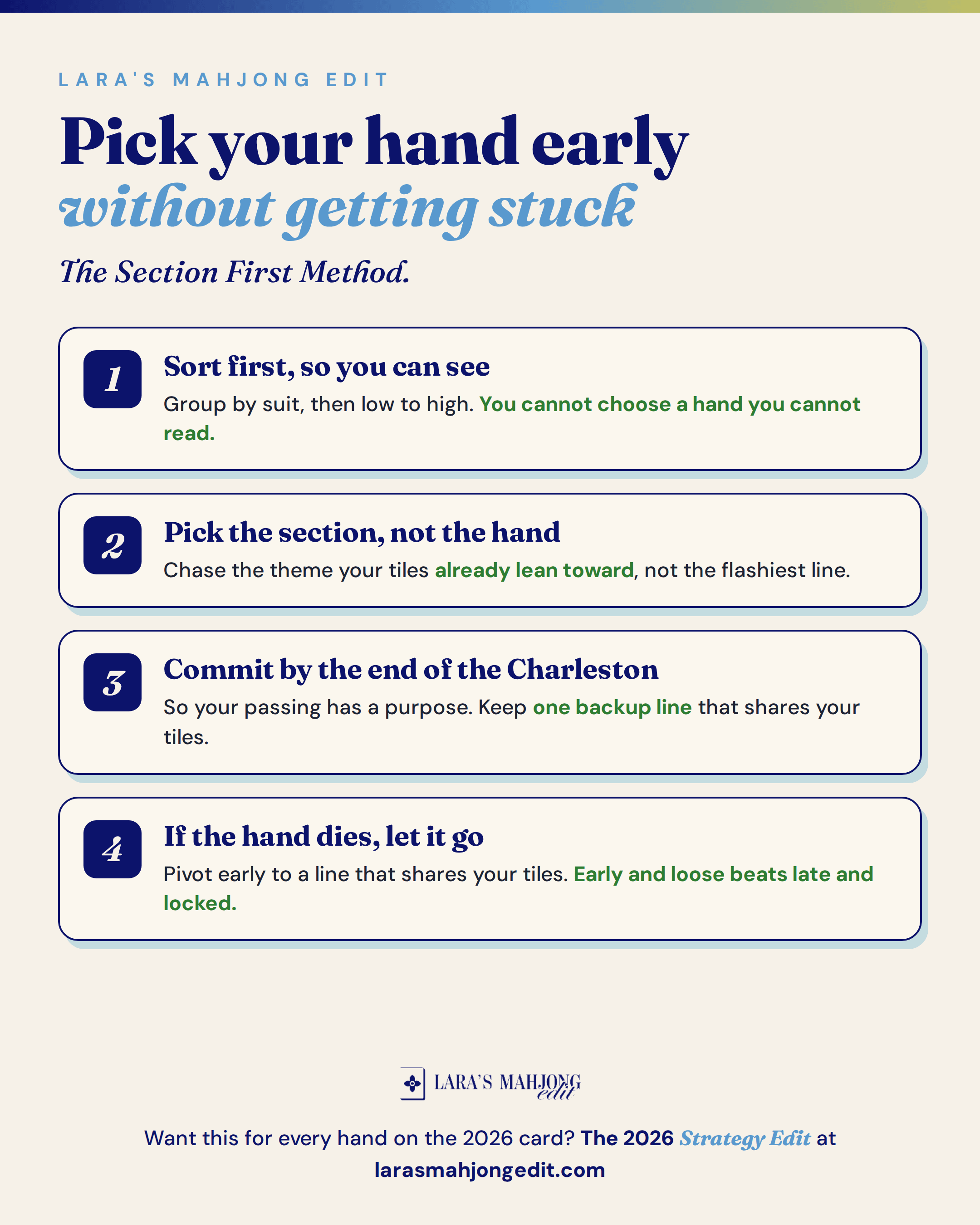
Sort first, so you can actually see
Before you decide anything, get organized. Group your tiles by suit, then put each suit in order, low to high. Set your winds, dragons, and flowers off to the side together. A sorted rack turns a scramble into something you can read at a glance, and you cannot choose a hand you cannot see.
Pick the section, not the hand
This is the shift that makes it click. Do not hunt for one perfect hand. Look at the card by section and ask which number theme your tiles already lean toward. A pile of 2s, 4s, 6s, and 8s points you to 2468. A little run of numbers points to Consecutive Run. Chase the section you are already feeding, not the one that looks the fanciest.
Then, inside that section, find the line you already have the most tiles for. Count what you have, then count what you still need. A hand you are several tiles into will almost always beat a flashier one you have barely started.
Commit by the end of the Charleston, and keep a backup
Here is the part that keeps you from boxing yourself in. Choose your hand by the time the Charleston ends, so your passing actually has a purpose. But keep one backup line in the back of your mind, ideally one that shares a lot of the same tiles.
You have the first few turns to adjust if the table tells you something new. What you cannot do is wait until the end and start over. Early and loose beats late and locked, every time.
If the hand dies, let it go
Sometimes the tiles you need simply stop coming, or everyone keeps discarding them. When that happens, the hand is gone, and that is not a failure. Pivoting early to a line that shares your tiles is one of the smartest moves you can make. Staying loyal to a hand that has died is the single thing that costs beginners the most.
One quick note on jokers as you choose: they can fill any group of three or more, but never a pair. If you are short on jokers, lean toward pair-heavy lines and plan to collect those naturals yourself.
If you want to stop guessing and see this for every hand on the 2026 card, that is exactly what I built the 2026 Strategy Edit for. It is a hand-by-hand playbook: what each hand needs, how flexible it is, and when it is worth chasing. The calm, confident way to read the whole card.
Lara