

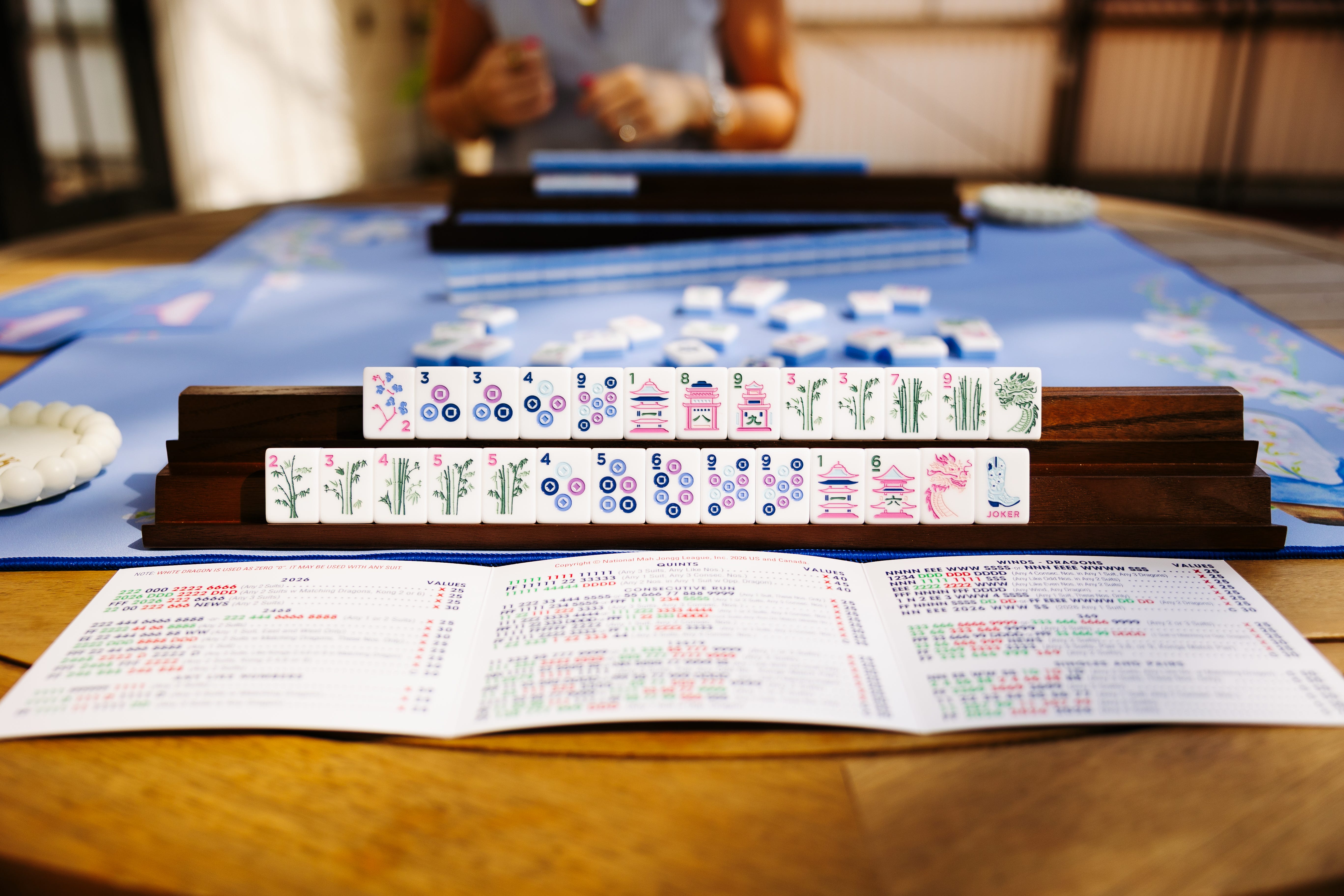
I love having a way to practice mahjong that only takes one other person. I still want the full table when we can get everyone together. But being able to sit down with one friend and play makes it much easier to fit in another game.
I also want practice to give me a little room to think. Sometimes I need another look at the card before I understand why a tile is worth keeping, or why a hand that looked promising a few turns ago doesn't make much sense anymore.
Siamese mahjong gives me a way to work on that, with someone across the table who can talk it through with me afterward.
Gladys Grad created Siamese mahjong in April 2015, and later developed other versions, including Royale Siamese for three or four players. As more people discover the game, I want to make sure she gets the credit for creating it.
The original version is for two players. Each person has two racks and works toward two mahjongs, and you can use your National Mah Jongg League card. Both players start with 27 tiles. East draws the 28th tile to begin, and there is no Charleston.
You can move your unexposed tiles between your own racks while you work out your hands. Exposures belong to their respective hands, so you can't keep moving everything around indefinitely. There's more to learn before you play; Gladys's official Siamese rules are the place to start.
That freedom to rearrange the tiles is a big part of the appeal for me. I have to consider where a tile would be most useful before I decide to let it go.
Something that does very little for one hand might be exactly what the other needs. Or I might be ready to break up a group until I find another line on the card that gives it a purpose. I like having a reason to look again before I settle on a plan.
For a newer player who already knows the basics of American mahjong, there's a lot to practice here. Being able to read a hand on the card doesn't mean you'll immediately recognize it in a rack full of tiles. That takes time, and playing with a friend gives you more chances to make those connections.
I'd agree before those first games that you're both there to practice. Take the time you need, and leave the tiles out after a hand so you can look at what else might have worked. It's much easier to understand a different choice when the tiles are still in front of you.
And if managing two hands feels like a lot, give yourself some patience. You're learning a different format. There is no need to be quick at it right away.
If you’d like more ways to practice, you can subscribe below for my mahjong articles.
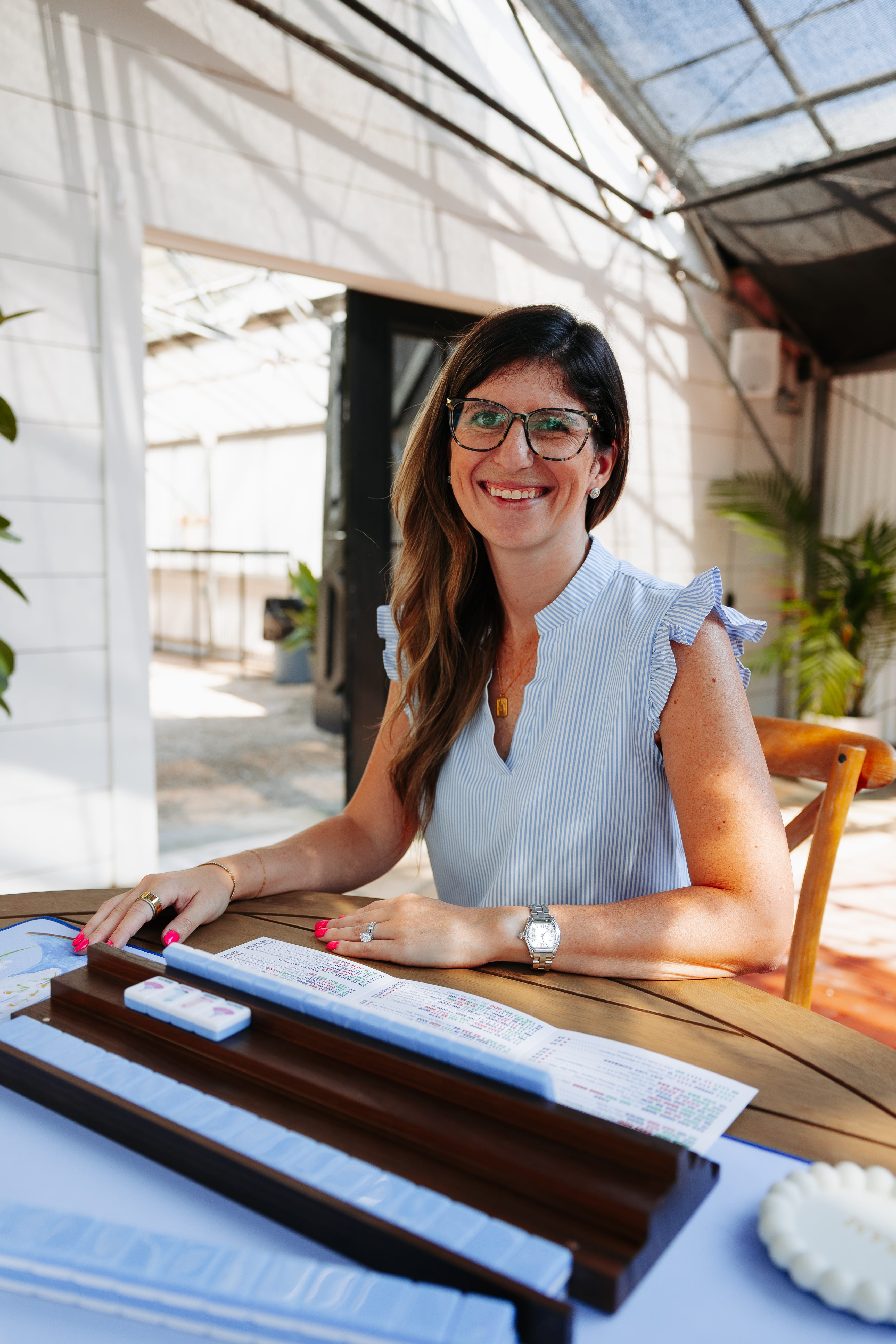
For experienced players, I like that Siamese gives you a reason to look beyond the hands you already know well. It's easy to return to a familiar part of the card because you can picture those hands without much effort. Having a second hand to build can send you looking somewhere else.
It also makes you consider how your two choices work together. You might like both hands individually, then realize they need the same tiles. Helping one can make the other harder to finish. That gives me more to think about than how close a single hand is to mahjong.
I want to keep getting better at reconsidering a hand when the tiles give me a reason to. That's useful practice for the four-player game, too. The rules and decisions aren't identical, but being willing to change my mind is a habit I want at either table.
I also like that we can talk about the game afterward. Sometimes the useful part is seeing what the other person noticed, especially when it never occurred to you. That's a good reason to leave a little time before you shuffle and start again.
If you already know how to play Siamese and want to work on the strategy with us, Jillian of Mahj-el Tov and I are teaching Siamese Strategy on Wednesday, October 28, from 7 to 8 p.m. ET on Zoom. We'll work through choosing hands that can develop together, where to use your tiles and jokers, and when to take a first mahjong or keep working toward a double. The recording is included.
You can find the class details and register here. I'd love to have you join us.
Lara
Have you tried Siamese yet? I’d love to hear what you enjoy about it, or what still feels tricky. Tell me in the comments.
Subscribe for more mahjong articles, and feel free to share this with the friend you’d like to play with.